


AI for the Social Sciences and Humanities / The Social Sciences and Humanities for AI Workshop
A CNRS-UChicago workshop bringing together social science, humanities, and natural science researchers to bridge the gap between AI research and practice, and to contribute to the co-design of alternative AI paradigms across disciplines.

Where Critical Thinking Meets Computational Practice
The rapid integration of artificial intelligence into the social sciences and humanities (SSH) has generated productive but unresolved tensions. Researchers are adopting AI to analyze vast datasets and model complex social dynamics, while SSH disciplines have also produced society’s most pressing critiques, revealing how algorithms reproduce bias, impose environmental costs, and threaten democratic processes.
AI systems are, by design, optimized over vast datasets; SSH inquiries are grounded in nuance, interpretation, and context. This methodological divide points to a broader societal risk. When scale becomes the dominant logic, individuals can be rendered invisible. Both SSH and democratic societies face the same challenge: building systems in which the “number” serves to empower the “individual,” rather than flatten it.
This workshop argues that SSH research is both essential for understanding AI, and for actively reconfiguring the power relations embedded in it. Together with computational and natural scientists, we seek to transform disciplinary tension into productive methodological synergy.
This workshop, co-organized by AISSAI (CNRS), the Data Science Institute (UChicago), and the IRL HumanitiesPlus (CNRS-UChicago), is the first in a two-part series. The Chicago meeting approaches AI from the social sciences and humanities perspective; a second, more disciplinarily-integrated leg is planned for Summer 2027 in Paris.
See a tentative workshop agenda here.
Three Guiding Themes
Each cluster serves as a dedicated space to investigate how co-designing SSH-centric AI can offer critical perspective on AI and its application across the sciences.
AI: Individuals, Societies & Democracy. Grounded in legal, ethical, political, and economic critiques (from micro-labor conditions to environmental costs) within specific technical architectures, this theme works to examine spaces of resistance, from artistic and activist practices to grassroots appropriation of AI.
AI: Languages, Texts & Cognition. Centered on epistemological sovereignty and human meaning-making, this theme addresses the hegemony of Anglo-centric commercial models by developing resources for diverse, historical, and low-resource languages. Mobilizing linguistics, semiotics, and cognitive science to analyze how AI shapes cognition and communicative practice.
AI: Analysis of Sources & Heritage. This theme brings together disciplines like art history, archaeology, and visual art together with computer vision and signal processing to move beyond digitization toward semantic analysis of visual, auditory, and material forms, including advanced 3D reconstructions of architectural and material heritage.
Speakers
-

Ada Ackerman
CNRS Research Scholar, THALIM, Cinema and Visual Arts -

Wilma Bainbridge
Associate Professor, Department of Psychology -

Bridget Fahey
Professor, Law; Faculty Co-Director, Data Ecology -

Clovis Gladstone
Interim Director, Project for American and French Research on the Treasury of the French Language (ARTFL), University of Chicago -

Paul Goguel Masson
Executive Director, HeritageWatch.ai -

Aziz Huq
Frank and Bernice J. Greenberg Professor of Law, University of Chicago -

Matthieu Husson
CNRS Research Director, PSL–Paris Observatory, Digital Humanities -

Barthélémy Jobert
Professor of Art History, Sorbonne Université -

Sandra Laugier
Professor of Philosophy, Université Paris 1 Panthéon-Sorbonne -

Hoyt Long
Andrew W. Mellon Professor of Japanese Literature and Digital Studies, Department of East Asian Languages & Civilizations, University of Chicago -

Marc Maillot
Associate Director and Chief Curator, Oriental Institute Museum, Department of Art History, University of Chicago -

Alda Mari
CNRS Research Director, Institut Jean Nicod, Linguistics -

Molly Offer-Westort
Assistant Professor, Department of Political Science -

Thierry Poibeau
CNRS Research Director, LATTICE -

Jason Salavon
Associate Professor, Department of Visual Arts, University of Chicago -

Greg Shakhnarovich
Professor, Toyota Technological Institute at Chicago -
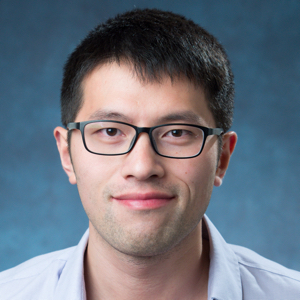
Chenhao Tan
Associate Professor of Computer Science and Data Science; Faculty Co-Director, Novel Intelligence -

Ben Zhao
Neubauer Professor of Computer Science
Ada Ackerman is a researcher at the CNRS (THALIM). She is a specialist on Sergei Eisenstein, with her work focusing on the relations between cinema and the fine arts, in addition to intermediality and cultural transfers between Russia, Europe, and the United States. She has published Eisenstein et Daumier, des affinités électives (Armand Colin, 2013) and A Biblioteca infinita de Serguei Eisenstein/ The Endless Library of Sergei Eisenstein (Kinoruss, 2019). She is currently preparing Reading with Eisenstein, a collective work devoted to Eisenstein’s library and reading. She curated the exhibition “Golem! Avatars d’une légende d’argile” (2017, Golem! Avatars of a Legend of Clay) at the Musée d’art et d’histoire du judaïsme, for which she edited the exhibition catalog. She is at work on a literary anthology of the Golem. She also curated the exhibition The Ecstatic Eye: Eisenstein, a filmmaker at the crossroads of arts for the Centre Pompidou-Metz (2019-2020), and edited the catalogue.
Wilma A. Bainbridge is an Associate Professor in the Department of Psychology. She received her B.A. in Cognitive Science from Yale University, studying both visual neuroscience and human-robot interaction. After a year-long research internship on robotics at the University of Tokyo, she completed her Ph.D in Brain & Cognitive Sciences at the Massachusetts Institute of Technology, studying vision and memory. She then completed postdoctoral training at the National Institute of Mental Health before coming to the University of Chicago.
Her research focuses on the cognitive neuroscience of perception and memory, looking at how certain items are intrinsically more memorable than others, and how the brain is sensitive to this information. She finds that there are certain images—photographs and even faces—that are remembered by most people, and some that are globally forgotten. She uses behavioral experiments, computer vision, machine learning, online studies, and functional MRI to understand what makes an item intrinsically memorable, and how the brain processes these items differently. She also explores the visual content of memories, using drawings and functional MRI to decode memory content.
Bridget Fahey is a Professor of Law at the University of Chicago Law School. Her research in constitutional law focuses on the theory and practice of American federalism, especially how our domestic governments interact in unexpected ways and use unorthodox legal tools to structure their joint projects. Her co-authored article Layered Constitutionalism and Structural Interdependency, 124 Colum. L. Rev. (2024), identifies and theorizes a largely hidden body of federal constitutional rules that shape—in ways expected and unexpected—state structural choices.
Her earlier article Coordinated Rulemaking and Cooperative Federalism’s Administrative State, 132 Yale L.J. 1213 (2023), argues that cooperative federalism programs have given rise to a distinctive administrative state—with forms of administrative action and legal frameworks that diverge in important respects from ordinary federal and state administrative law. The Article illustrates this point by identifying a distinctive form of legislative rulemaking—“coordinated rulemaking”—which is widely used in cooperative federalism programs, but cannot be assimilated into familiar administrative law frameworks. Her article Data Federalism, 135 Harv. L. Rev. 1107 (2022), uncovers a vast intergovernmental market in private data exchanged by federal, state, and local governments, and the unusual cross-governmental bureaucracies that govern that market. Both pieces expound on the insight she first developed in Federalism by Contract, 129 Yale L.J. 2326 (2020), which demonstrated that the federal government and states use contract-like instruments to structure intergovernmental programs and transact in a wide range of governmental powers. Before joining the faculty, her article Consent Procedures and American Federalism, 128 Harv. L. Rev. 1561 (2015), identified and theorized the federal government’s practice of using cooperative federalism programs to intervene in and reshape state and local governing processes.
Professor Fahey is also interested in the government stewardship of private data. Building on Data Federalism, her cross-disciplinary work funded by a grant from the Neubauer Collegium aims to develop a descriptive and conceptual understanding of the legal-technical architectures that shape of how data moves between—and is controlled by—our domestic governments.
Professor Fahey received a BA in Political Science from the University of Chicago and a JD from Yale Law School. Before joining the faculty, she was a litigator at the Washington DC office of WilmerHale, held a fellowship at the University of Pennsylvania Law School and was a law clerk on the DC Circuit and on the Supreme Court of the United States for Justice Sonia Sotomayor. Earlier in her career, Professor Fahey worked as a management consultant for the Boston Consulting Group in Chicago and Berlin.
She teaches 1L Contracts and Constitutional Law, co-coordinates the Public Law Workshop, and has taught informal Greenberg Seminars on eclectic topics including Space Law, Order Without Law, Free Speech on Campus, and others.
Trained both as a literary scholar and a digital humanist, my work is divided between my research on French Early-Modern intellectual history and my interest in leveraging new computational techniques to enhance the study of text. As a core member of the ARTFL Project for over a decade, I have been mostly focused on devising Natural Language Processing and Data-Mining techniques to tackle large datasets, such as search and retrieval, text-reuse detection, or clustering. As such, I have been engaged in numerous computational research projects, ranging from data-mining Diderot and d’Alembert’s Encyclopédie to uncover the discursive makeup of the classes of knowledge, to reevaluating the Enlightenment impact on French revolutionary debates, to developing digital tools meant to support scholarly work on large text corpora.
Paul Goguel Masson is Executive Director of heritagewatch.ai (HWAI), an independent nonprofit building the world’s first operational intelligence system for cultural heritage protection. Founded in February 2025 at the Paris AI Action Summit, HWAI combines satellite imagery, AI-powered change detection, and deep heritage expertise to monitor threats to cultural heritage worldwide — looting, climate degradation, conflict-related destruction — and deliver open-access intelligence to the organisations that can act. HWAI produces emergency reports within 48 hours of crisis events, publishes long-term trend analyses, and is developing an automated alert system for real-time monitoring. Its AI looting detection model, co-developed with Microsoft AI for Good, is open-sourced on GitHub. Founding partners include ALIPH, Iconem, Microsoft AI for Good, and Planet Labs.
Before joining HWAI, Paul worked at the intersection of civil society, culture, and democratic governance. As Partnerships Director at the Democracy & Culture Foundation and Head of Development at Democratic Society, he worked on questions of institutional legitimacy, public deliberation, and the conditions under which evidence shapes collective decisions, including the growing role of AI in mediating access to information and influencing democratic life. He previously held cultural relations roles at the British Embassy in Paris and at the Rodin Museum.
Aziz Z. Huq is a scholar of US and comparative constitutional law with interests in democratic backsliding and AI regulation. His scholarship is published in several books and in leading law, social-science, and political-science journals. He has also written for the London Review of Books, the Atlantic, the New York Times, and many other non-specialist publications. He has an active pro bono practice, and is on the board of the Seminary Coop and the ACLU of Illinois.
Before joining the Law School faculty, Professor Huq was counsel and then director of the Brennan Center’s Liberty and National Security Project, litigating cases in both the US Courts of Appeals and the Supreme Court. As a Senior Consultant Analyst for the International Crisis Group, he researched and wrote on constitutional design and implementation in Pakistan, Nepal, Afghanistan, and Sri Lanka. He was a law clerk for Judge Robert D. Sack of the US Court of Appeals for the Second Circuit and then for Justice Ruth Bader Ginsburg of the Supreme Court of the United States. He is also a 1996 summa cum laude graduate of the University of North Carolina at Chapel Hill, and a 2001 graduate of Columbia Law School where he was awarded the John Ordronaux Prize (for the student graduating first in their class).
Matthieu Husson is a researcher at the CNRS PSL-Paris Observatory working in the history of astral science team. His research addresses the history of astronomy in Europe (1200-1550) with a focus on the mathematical practices of astronomers and their interaction with the broader social and cultural world of the late medieval and early modern period. Additionally, a consistent research effort is also made in the direction of the digital humanities and their interface with artificial intelligence especially for natively digital critical edition of the non-discursive elements of astronomical sources (tables and diagrams). Finally, he is developing as well a research on the historiographical practices of (European) astronomers and the emergence of ‘global’ histories of astronomy (1200-1800).
Barthélémy Jobert has been Professor of Art History at Paris-Sorbonne University since 2004, and Vice-President of its Scientific Council since 2008. Since spring 2010, he has also served as Associate Professor for Research and, within the framework of Sorbonne Universities, coordinated Paris-Sorbonne’s participation in the “Initiatives for the Future” (LABEX, IDEX) calls for proposals. He notably represented the University before the international jury of the IDEX program.
A graduate of the École Normale Supérieure and an agrégé in history, he was a Teaching Assistant at Harvard University (1986-1987), a research fellow in the Prints Department of the National Library of France while also lecturing at Paris-Sorbonne University (1988-1992), then a recipient of a Thiers Foundation grant, before becoming a temporary lecturer (1994-1995), and then a senior lecturer in contemporary art history at Paris-Sorbonne University (1995-2001). A Focillon Fellow at Yale University (2000), he was subsequently appointed professor at Grenoble II-Pierre Mendès-France University (2001-2004).
He is a specialist in nineteenth-century European art, but more specifically in French Romanticism and in particular the work of Eugène Delacroix. He directed the ANR “Corpus” program for the electronic edition of Delacroix’s correspondence (www.correspondance-delacroix.fr). He has also been a curator of exhibitions in France and abroad (Louvre Museum, National Library of France, Museum of Music, Museums of Grenoble and Arras, Museums of Shimane and Yokohama in Japan).
In 2003-2004, he was responsible for setting up the Master’s program in Humanities/History and Art History at the University of Grenoble II. He participated in various competition juries (National Heritage Institute, ENS-LSH, auctioneers’ competition).
From 2003 to 2006, he served as a project manager for history, art history, and visual arts at the Ministry of Research, within the Scientific, Technical, and Pedagogical Mission, which at the time performed the functions later transferred to AERES. He has also been a member of the strategic reflection committee, Humanities and Social Sciences department, at the French National Research Agency (ANR) since 2008. He was a member of the National Council of Universities (CNU, 22nd section) from 2007 to 2011.
A member of the Pedagogical Council of the École de Chaillot, he is also a member of the Steering Committee of the Maison Française d’Oxford, and a member of the Council of the French Centre at Saarbrücken University. An expert or jury member for various French (ANR) and foreign (German DAAD, Swiss FRS) bodies, he is a member of the “Humanities and Social Sciences” scientific committee of the Belgian National Fund for Scientific Research.
Sandra Laugier is a professor of philosophy at the University of Paris 1 Panthéon-Sorbonne, with her primary areas of study being moral philosophy, political philosophy, philosophy of language, gender studies, and popular culture. She is also a Senior member of the Institut Universitaire de France, and currently serves as the deputy director of the Institut des Sciences Juridique et Philosophique de la Sorbonne.
In 2014, Sandra received the title of the Chevalier de la Légion d’honneur – the highest order of merit in France. She was later awarded the Grand Prix Moron by the Académie Française, before being elected to the American Philosophical Society in 2024.
My research and teaching interests range from literature, media, and book history to platform studies, cultural analytics, and generative AI. My most recent monograph, The Values in Numbers: Reading Japanese Literature in a Global Information Age (2021), offers both a reinterpretation of modern Japanese literature through computational methods and an introduction to the history, theory, and practice of looking at literature through numbers.
Since then, I’ve written articles that rethink literary translation in the wake of neural machine translation, that explore how platforms are reshaping global televisual attention and response, and that consider the possibilities of generative AI for cultural co-intelligence. I’m currently collaborating on projects that include Niche Worlds: How Streaming Platforms Changed Attention and Reception and a set of studies that investigate the limits and affordances of large-language models as readers, writers, and instructors of literature.
I’ve published articles in a wide range of journals, including Critical Inquiry, New Literary History, Positions, Journal of Japanese Studies, Journal of Asian Studies, Journal of Cultural Analytics, Public Books, Modern Language Quarterly, and PMLA.
Dr. Marc Maillot received his Ph.D. from Sorbonne University in 2013 and is now an associate member of the UMR 8167 “Orient et Méditerranée” (French National Research Center-CNRS). Before his appointment as a Courtesy Assistant Professor at UCF in 2015, Dr. Maillot conducted seminars on late antiquity urbanism and architecture at Paris-Sorbonne University, and Shendi University in Sudan. His research interests include vernacular architecture both in Egypt and Sudan, Meroitic iconography, Social Anthropology, and urbanism in antiquity. Dr. Maillot has worked on archaeological sites abroad since 2007, with a special focus on the Middle Nile Valley, on sites such as Muweis, el-Hassa, and Sai Island. He is currently the mission director of the archaeological site of Damboya, Sudan. His field experience also includes the archaeology of Roman settlements in France, particularly on the shores of the Marne River. His past research has been focused on technical approaches to the study of cultural transmission, and more specifically on the theme of casemate foundations for monumental brick structures along the Nile. Dr. Maillot’s current research focuses on the Osirian cult practice in the Meroitic royal pageantry, architectural representation in the iconography of the Middle Nile Valley, and late antiquity Sudanese towns as production machines for a centralized power based at Meroe
I am CNRS Directrice de Recherche at l’Institut Jean Nicod (CNRS/EHESS/ENS-PSL). I am a specialist in formal semantics, with training in classics (Greek, Latin, Sanskrit, from University of Lausanne, CH), computational linguistics (from IRIT, Toulouse) and logic (CUNY, NY). For nearly fifteen years my research has focused on the distinction between subjective and objective truth, and more specifically on the expression of bias and beliefs in situations of uncertainty. I have spent two year at University of Chicago, where I have initiated the Phronesis programme, which in 2024 was instrumental in developing the HumanitiesPlus international research laboratory (CNRS/Université de Chicago).
Beginning in 2017, I have applied these theoretical results to mental states and their linguistic expression in my research on hybrid AI. I have notably developed a new methodology to identify and classify urgent information during environmental crises on social media. This methodology was implemented in INTACT (Detecting Intentions, Predicting Actions) software, a technology developed in collaboration with the Toulouse Research Institute in Information Technology. Based on a linguistic model that takes full account of utterances, INTACT offers high potential for application to other types of crises, especially the information-related ones which I am currently studying.
Most of my current research lies in cognitive science, as the locus where human sciences and computational sciences meet. I am interested in how language encodes values and how endorsements of values (including truth) are grounded in evidence. My applied work explores how the connections between evaluativity and proof shapes the public debate on social networks and how the current norms of believability unfold within the democratic debate.
I work at DEC (Département d’Etudes Cognitives), ENS, where I co-direct the Cognitive AI Team. At Institut Jean Nicod, I am part of the Linguistic Collège and I am the head of the Language, Thought and Behavior’s Team.
I am an Assistant Professor in the Department of Political Science at The University of Chicago.
I work on quantitative methodology for social science research, with a focus on causal inference, machine learning, and experimental design–particularly for adaptive experiments. My PhD is from Yale, joint in Political Science and Statistics & Data Science.
Previously, I was a post-doctoral fellow in Susan Athey’s Golub Capital Social Impact Lab at the Stanford Graduate School of Business.
In addition to the PhD, I hold a Masters in Statistics, also from Yale, and a Masters in Public Affairs, from the Princeton School of Public and International Affairs. My undergraduate degree was in cultural anthropology from Grinnell College; after college, I spent a year in Lesotho, teaching high school students, and two years in Madagascar, as a Peace Corps volunteer.
I am a Research Director at CNRS, working at LATTICE (Languages, Texts, Computational Processing, and Cognition). I hold a PRAIRIE-PSAI Fellowship (Paris Artificial Intelligence Research Institute–Paris School of Artificial Intelligence), focusing on Natural Language Processing, Digital Humanities and the Impact of AI on Society.
I also serve as an Affiliated Lecturer in Theoretical and Applied Linguistics (Language Technology Lab) at the University of Cambridge and am a member of Cambridge Digital Humanities.
Using software processes of his own design, Jason Salavon generates and reconfigures masses of communal material in an effort to present new perspectives on the familiar. His projects unearth unexpected pattern while exploring the relationship between the part and the whole or the individual and the group. Reflecting a natural attraction to popular culture and the day-to-day, his work regularly incorporates the use of common references and source material. The final compositions are exhibited as art objects, such as photographic prints and video installations, while others exist in a real-time software context.
Born in Indiana, raised in Texas, and based in Chicago, Salavon earned his MFA at The School of the Art Institute of Chicago and his BA from The University of Texas at Austin.
His work has been shown in museums and galleries around the world. Reviews of his exhibitions have been included in such publications as Artforum, Art in America, The New York Times, and The Wall Street Journal. Examples of his artwork are included in numerous prominent public and private collections. He is currently an Associate Professor in Visual Arts and Faculty in the Computation Institute, at the University of Chicago. He was also employed for numerous years as an artist and programmer in the video game industry.
I am a Professor at Toyota Technological Institute ad Chicago (TTIC), a philanthropically endowed academic computer science institute located on the University of Chicago campus. I also hold a part-time faculty appointment at the University of Chicago Department of Computer Science. I lead the Perception And Learning Systems (PALS) group. Prior to coming to TTIC, I was a post-doctoral researcher at the Department of Computer Science of Brown University, working with Michael Black. I received my PhD degree at MIT where I worked at CSAIL with Trevor Darrell. I obtained my MSc degree at the Computer Science Department of the Technion, Israel Institute of Technology in Haifa, Israel, and my undergraduate degree in Math and CS from Hebrew University in Jerusalem, Israel.
Chenhao Tan is an associate professor at the Department of Computer Science and the UChicago Data Science Institute. His main research interests include language and social dynamics, human-centered machine learning, and multi-community engagement. He is also broadly interested in computational social science, natural language processing, and artificial intelligence.
Ben Zhao is a Neubauer Professor of Computer Science at University of Chicago. Over the years, he’s followed his own interests in pursuing research problems that he finds intellectually interesting and meaningful. That’s led him to work on a sequence of areas from P2P networks, online social networks, SDR/open spectrum systems, graph mining and modeling, user behavior analysis, to adversarial machine learning. Since 2016, he’s mostly worked on security and privacy problems in machine learning and mobile systems. His meandering interests have led him to publish at a range of top conferences, including Usenix Security/Oakland/CCS, IMC/WWW, CHI/CSCW, and Mobicom/SIGCOMM/NSDI.
Together with Prof. Heather Zheng, he co-directs the SAND Lab (Security, Algorithms, Networking and Data) at University of Chicago. He received his PhD in Computer Science from UC Berkeley in 2004, where he was advised by John Kubiatowicz and Anthony Joseph, and created the Tapestry distributed hash table (dissertation). He received my MS from Berkeley in 2000, and his BS in computer science from Yale in 1997. He is an ACM Distinguished Scientist, a recipient of the NSF CAREER award (2005), MIT Tech Review’s TR-35 Award (Young Innovators Under 35) (2006), IEEE Internet Technical Committee’s Early Career Award (2014), and one of ComputerWorld’s Top 40 Technology Innovators under 40. His papers have somewhere around 28,000 citations and an H-index of 66 (for whatever that’s worth). In some of his “free time,” he writes about research and PhD life on Quora.
Venue & Dates
Dates: October 21–22, 2026
Location: University of Chicago, David Rubenstein Forum and The Franke Institute
Format: Two-day, in-person workshop
Next in Series: Spring 2027 · Paris, France
Organizing Committee and Collaborating Organizations
This workshop is the product of a transatlantic collaboration between leading research institutions, the CNRS and the University of Chicago, committed to uniting researchers around the scientific understanding of AI and AI-based methodologies.
The organizing committee is composed of Matthieu Husson (CNRS – AISSAI), Tiana Pyer-Pereira (UChicago Data Science Institute), Rebecca Willett (UChicago Data Science Institute), and Laetitia Zecchini (IRL HumanitiesPlus).
With questions, please contact Tiana Pyer-Pereira (tianap@uchicago.edu).


