Summer 2026
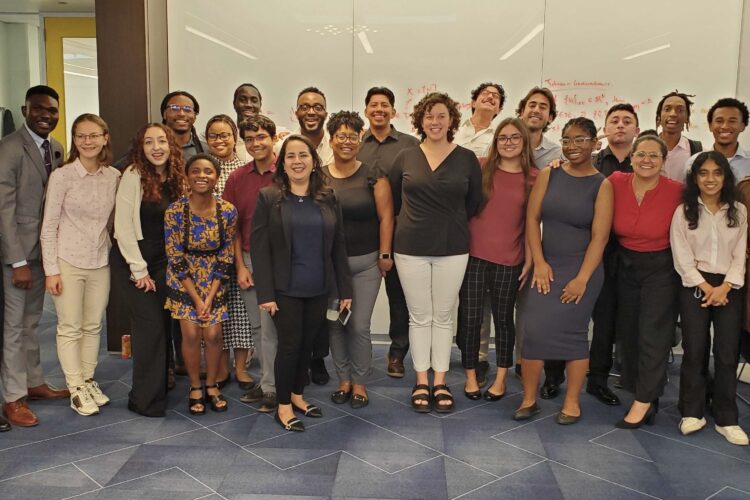
DSSI Summer Program students engage in real-world data science research that addresses pressing social and environmental challenges. In 2026, DSSI Research Director Mario Bañuelos, Associate Professor of Mathematics at California State University, Fresno, mentored students as they developed and applied data and AI skills methods – including natural language processing, machine learning, and time series analysis – to projects spanning public health, environmental sustainability, and public policy.
2026 Research Projects
The Heart of Chicago: Visualizing Community Needs Through 311 Requests
Students: David Ariniegas Tinjaca (University of Illinois Chicago), Lauren Corbie (Spelman College), Nyela Djossou (Spelman College) and Ashley Gonzalez (California State University, Fresno)
Chicago’s 311 system is a non-emergency service that allows city residents to report issues like potholes, rodents, and graffiti, and other concerns that impact their day-to-day life. DSSI students worked to improve the efficiency of the 311 response time system by making data-driven predictions of monthly 311 request volumes by type across all 77 Chicago neighborhoods, while also investigating whether service quality is distributed equitably across the city.
David Ariniegas Tinjaca, Lauren Corbie, Nyela Djossou and Ashley Gonzalez built and compared several forecasting models using six years of data (2019–2025) spanning 55 request types and supplemented by demographic, weather, and response time datasets. They found that SARIMAX, a time series model enhanced with weather data, performed best for non-seasonal, weather-driven request types, while simpler baseline models outperformed it for highly seasonal ones. This led to their conclusion that a varied modeling approach, tailored to the seasonality of each request type, is essential for consistently accurate predictions. Beyond forecasting, the team uncovered a troubling equity pattern in response times in the Far Southeast Side compared to the Northside, a disparity they connected to the city’s history of 1930s redlining. Ideas for future directions from this work include using these forecasts to send proactive community alerts before demand surges, and advocating for more equitable resource allocation across Chicago’s neighborhoods.

Filling in the Gaps: A Multimodal Approach to Black Maternal Health
Students: Mali Glemaud-Thesee (Morehouse College), Edward Kofi Sei (Howard University), Christyana Walker (Spelman College), Lilly Weaver (University of Texas San Antonio), and Peace Amichoh (Prairie View A&M University)
Across the United States, Black mothers face severe and persistent health disparities. While national datasets confirm this trend, there is a critical gap in maternal health research as the data fails to capture the lived experiences and environmental factors that drive these disparities. Working in partnership with Jewel of Justice, a California-based organization advancing Black maternal wellness, students applied natural language processing (NLP) to qualitative data, working towards bridging this gap by combining large-scale quantitative data with community-centered qualitative analysis.
Mali Glemaud-Thesee, Edward Kofi Sie, Christyana Walker, Lilly Weaver and Peace Amichoh built a three-part research pipeline, combining CDC time series analysis, geospatial mapping, and NLP of community survey data from workshops led by Jewel of Justice in Fresno, CA. Their quantitative time series work revealed deeply alarming trends of maternal health disparities amongst Black mothers, including increased gestational hypertension rates and low birth weight rates among Black infants. Through geospatial analysis, the group found that Black residents in the area represent a small share of the population but bear a disproportionate burden of poverty and preterm birth risk. On the qualitative side, using NLP analysis the team identified five core themes including sense of community, health resources, and cultural connection. These findings highlight the need for more targeted interventions, and can be used to develop refined, validated survey questions to help the organization better measure participant outcomes going forward as they grow their community health impact.

The Palm Oil Crisis: A Forecast of Deforestation in Sumatra
Students: Sasha Carr (Chicago State University), Gabriela Germán Toledo (University of Puerto Rico Río Piedras), Yuxuan Li (University of Chicago), Srihitha Solleti (North Carolina State University) and Janine Marie Villegas (University of Illinois Chicago)
Inclusive Development International (IDI) is a human rights organization that holds corporations accountable for environmental harm. In collaboration with DSI, IDI has worked to examine the environmental impacts of the palm oil industry. In Sumatra, Indonesia, millions of hectares of forest have been lost over recent decades, with roughly a third of that deforestation driven by oil palm plantations. PalmWatch, a platform developed by IDI and DSI, maps the social and environmental impacts of palm oil cultivation. However, it has historically only documented past forest loss, presenting the need for predictive modeling of industry-driven deforestation. Students on this project worked to build predictive models that could forecast how much deforestation would occur between 2019 and 2023, and what share of it would be driven by palm oil plantations.
Students Sasha Carr, Gabriela Germán Toledo, Yuxuan Li, Srihitha Solleti and Janine Marie Villegas worked with a dataset of hexagonal grid cells covering Sumatra, each containing forest size, deforestation fraction, and neighboring cell data from 2000 to 2018. They tested several machine learning models, including Random Forest, XGBoost, LightGBM, and Gradient Boosting, to reveal that remaining forest area and neighboring cell deforestation fraction were the strongest predictors. Their forecasts project a general upward trend in deforestation starting from 2019, with the Riau region of Sumatra identified as a particularly high-risk area due to its resource-rich environment. The team’s framework gives PalmWatch a tool to help anticipate future deforestation hotspots.

Forecasting California Pesticide Use: Closing the 2-Year Reporting Gap
Students: Peter Kasomo (Prairie View A&M University), Sodeeq Adeyinka (Chicago State University), Tristan Prathap (City Colleges of Chicago, Harry S Truman College) and Luis Ortiz (California State University, Fresno)
There is a structural lag in California’s statewide pesticide reporting system. Official pesticide usage data is always two years delayed, leaving policymakers and advocates unable to respond effectively to regulatory windows, legislative sessions, or emerging public health threats. In order to address this gap, students set out to build a time-series forecasting system that predicts monthly pesticide usage across California’s 58 counties for the two missing years, aiming to help spot trends, monitor progress of pesticide restrictions, and warn communities who may be impacted.
Peter Kasomo, Sodeeq Adeyinka, Tristan Prathap and Luis Ortiz worked as a team of researchers to analyze monthly usage data for 8 active pesticide ingredients across 58 counties from 2017 to 2026. The data incorporated weather, climate, and price indices as exogenous predictors. Since 96% of the variance in pesticide use is explained by seasonality, the prior year’s data served as a strong naive baseline. They used a coordinate descent approach to tune models across 20-38 dimensions, then evaluated seven models using walk-forward cross-validation, making predictions using exogenous variables and delayed target variables. The team found that using an ensemble of the top three best-performing models for each pesticide class consistently outperformed any single model. Aggregating regional models built using California’s CACASA agricultural clustering scheme achieved lower forecast error and produced narrower prediction intervals, displaying greater accuracy and precision in forecasting. In the end, the team found that regional models were best used for statewide pesticide use prediction, county models were more useful for local forecasts, and the top-three ensemble model can effectively capture seasonality for the following two years.

Expanding Valley Fever Forecasting in California with Environmental LSTMs
Students: Austin Tathong (California State University, Fresno), Sanaa Jain (North Carolina State University), Félix Arzola (University of Puerto Rico, Río Piedras) and Hiep Le (City Colleges of Chicago, Harry S Truman College)
Valley Fever is an infectious respiratory disease caused by the fungus Coccidioides, found in soil across the southwestern United States. Over 20,000 cases are reported annually, with numbers still rising. Environmental conditions like wind, precipitation, wildfires, and pesticide use are known to influence when and where outbreaks occur. If patterns of these conditions can be predicted, communities and health officials could potentially get ahead of surges before they occur. Students focused on eight California counties particularly affected by high rates of Valley Fever, aiming to identify which environmental factors drive case rates most strongly and build accurate forecasting models.
Austin Tathong, Sanaa Jain, Félix Arzola and Hiep Le used monthly data from 2001 to 2024 across ten environmental variables: precipitation, humidity, wind speed, wind run, wind event count, soil temperature, air quality, wildfires, fungicide usage, and rodenticide usage. The team utilized this data to train and compare two types of models: Long Short-Term Memory networks (LSTMs) and simpler linear regression baselines. They tested each model in two ways: trained on a single county’s own data, or trained on monthly data aggregated across all eight counties before being evaluated separately. The county-specific LSTMs better captured the seasonal patterns of each county’s outbreak patterns. Notably, the most important predictive features varied by county, reinforcing that a one-size-fits-all model falls short for this disease. Future work may focus on expanding the analysis to all counties, grouping them into coastal and inland regions, and incorporating feature-specific time lags to better capture how environmental changes affect case counts.

News that Spreads like Spores: Using Media Signals to Predict Valley Fever Incidence
Students: Jules Ruiz (University of Chicago), Bibesh Sedhain (Howard University), Zion Spruill (Morehouse College) and Rebecca Sonn-Lees (University of Chicago)
Working alongside the team conducting forecasting work that focused on environmental and clinical data, these DSSI students asked a different question: can what people are reading and posting online about Valley Fever help predict when and where outbreaks will occur? The team investigated whether news articles and social media engagement and activity on Twitter could meaningfully improve monthly Valley Fever case-rate predictions in California and Arizona.
Jules Ruiz, Bibesh Sedhain, Zion Spruill and Rebecca Sonn-Lees curated monthly datasets combining reported Valley Fever case counts, environmental variables, news article metadata, and scraped social media data, then built a Natural Language Processing (NLP pipeline to extract meaningful signals from the text. Using Principal Component Analysis (PCA), they identified distinct topic clusters in both sources: news coverage grouped around health agencies, climate change, and obituaries, while social media clustered around personal accounts, awareness discussions, and clinical research. These signals were fed into LSTM deep learning models and SARIMAX time-series models alongside environmental features. While media signals worked well with capturing public attention, they better served as complementary features than as standalone predictors, modestly improving forecast accuracy when combined with environmental data. The team found that media activity tends to reflect outbreaks after they happen, more than it predicts them ahead of time. Future work entails exploring why media-case relationships differ across the states, incorporating demographic data with media signals, and expanding research across other social media platforms to build a more complete picture of public awareness as a forecasting tool.

2026 DSSI Students
-

Ashley Gonzalez
California State University, Fresno -

Austin Tathong
California State University, Fresno -

Bibesh Sedhain
Howard University -

Christyana Walker
Spelman College -

David Arciniegas
University of Illinois Chicago -

Edward Kofi Sie
Howard University -

Felix Arzola
University of Puerto Rico Río Piedras -

Gabriela Germán
University of Puerto Rico Río Piedras -

Hiep Le
City Colleges of Chicago -

Janine Marie Villegas
University of Illinois Chicago -

Jules Ruiz
University of Chicago -

Lauren Corbie
Spelman College -

Lilly Weaver
University of Texas at San Antonio -

Luis Ortiz
California State University, Fresno -

Mali Glemaud-Thesee
Morehouse College -

Nyela Djossou
Spelman College -

Peace Amichoh
Prairie View A&M University -

Peter Kasomo
Prairie View A&M University -

Rebecca Sonn-Lees
University of Chicago -

Sanaa Jain
North Carolina State University -

Sasha Carr
Chicago State University -

Sodeeq Adeyinka
Chicago State University -

Srihitha Solleti
North Carolina State University -

Tristan Prathap
City Colleges of Chicago -

Yuxuan (Kate) Li
University of Chicago -

Zion Spruill
Morehouse College
Ashley Gonzalez is studying Applied Math at California State University, Fresno.
Austin Tathong is studying Computer Science at California State University, Fresno.
Bibesh Sedhain is studying Computer Science at Howard University.
Christyana Walker is studying Computer Science at Spelman College.
David Arciniegas is studying Data Science at the University of Illinois Chicago.
Edward Kofi Sie is studying Computer Science at Howard University.
Felix Arzola is studying Computer Science at the University of Puerto Rico Río Piedras.
Gabriela Germán is studying Computer Science at the University of Puerto Rico Río Piedras.
Hiep Le is studying Actuarial Science at City Colleges of Chicago.
Janine Marie Villegas is studying Data Science at the University of Illinois Chicago.
Jules Ruiz is studying Statistics and Data Science at the University of Chicago.
Lauren Corbie is studying Computer and Information Sciences at Spelman College.
Lilly Weaver is studying Statistics and Data Science at the University of Texas at San Antonio.
Luis Ortiz is studying Applied Math at the California State University, Fresno.
Mali Glemaud-Thesee is studying Computer Science at Morehouse College.
Nyela Djossou is studying Computer Science at Spelman College.
Peace Amichoh is studying Computer Science at Prairie View A&M University.
Peter Kasomo is studying Computer Science at Prairie View A&M University.
Rebecca Sonn-Lees is studying Public Policy and Data Science at the University of Chicago.
Sanaa Jain is studying Biochemistry at North Carolina State University.
Sasha Carr is studying Computer Science at Chicago State University.
Sodeeq Adeyinka is studying Computer Science at Chicago State University.
Srihitha Solleti is studying Computer Science at North Carolina State University.
Tristan Prathap is studying Mathematics at City Colleges of Chicago.
Kate Li is studying Statistics at the University of Chicago.
Zion Spruill is studying Political Science at Morehouse College.
Leadership and Staff
-
David Uminsky (he/him)
Executive Director and Research Professor, Data Science Institute -

Mindi Mysliwiec (she/her)
Senior Director of Partnerships & Chief of Staff, Data Science Institute -

Susan Paykin (she/her)
Senior Associate Director, Community-Centered Data Science -

Lilly Gullickson (she/her)
Research Program Administrator -

Laura Schmidt (she/her)
Program Administrator, Community-Centered Data Science
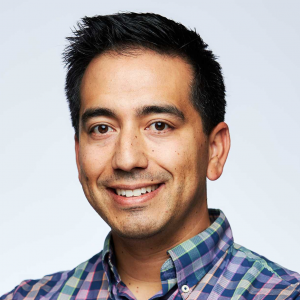
David Uminsky joined the University of Chicago in September 2020 as a senior research associate and Executive Director of Data Science. He was previously an associate professor of Mathematics and Executive Director of the Data Institute at University of San Francisco (USF). His research interests are in machine learning, signal processing, pattern formation, and dynamical systems. David is an associate editor of the Harvard Data Science Review. He was selected in 2015 by the National Academy of Sciences as a Kavli Frontiers of Science Fellow. He is also the founding Director of the BS in Data Science at USF and served as Director of the MS in Data Science program from 2014-2019. During the summer of 2018, David served as the Director of Research for the Mathematical Science Research Institute Undergrad Program on the topic of Mathematical Data Science.
Before joining USF he was a combined NSF and UC President’s Fellow at UCLA, where he was awarded the Chancellor’s Award for outstanding postdoctoral research. He holds a Ph.D. in Mathematics from Boston University and a BS in Mathematics from Harvey Mudd College.
Staff

Executive Assistant
Mindi has experience managing, sourcing and scoping a portfolio of data science experiential learning partnerships across social impact organizations, corporate, civic and government entities. Mindi managed earlier iterations of our work with the 11th Hour Project at the University of San Francisco where she served as the Senior Director of Strategy and Operations of the Data Institute. Mindi is a member (inactive) of the California and Illinois bars and received her JD from University of California College of the Law, San Francisco and her BS, Political Science from Santa Clara University.
Susan Paykin is the Senior Associate Director, Community-Centered Data Science, at the DSI, where she oversees social impact and strategic partnership initiatives across the organization’s research, education, and engagement. She is also the Program Lead of the Open Spatial Lab where she leads geospatial data science projects and partner engagement. Susan was previously the Research Manager at the Center for Spatial Data Science at UChicago and has served in leadership roles for environmental and social impact organizations. She holds a Master in Public Policy (M.P.P) from the Harris School of Public Policy at University of Chicago and a B.A. from Brandeis University.
As Research Program Administrator, Lilly Gullickson manages summer research programs and supports research-oriented events, educational programming, and outreach. Before joining DSI in November 2025, Lilly worked as Assistant Director of Operations for the UChicago Student Centers where she managed operational needs across Ida Noyes Hall and Reynold’s Club, a team of 25 student workers, and daily events across the two facilities. In addition, Lilly has held administrative roles within the Booth School of Business, the Harris School of Public Policy, and the Office of the Provost. Lilly received
Laura Schmidt is the Program Administrator, Community-Centered Data Science at the Data Science Institute. Prior to joining the DSI team, she worked as the Research Program Coordinator for the Community Science and Innovation for Environmental Justice initiative at the Johns Hopkins Bloomberg School of Public Health, providing administrative support and leading cross-functional coordination for citizen-led environmental and public health research. Laura holds years of experience within research administration, youth programming, community engagement and science education. She graduated from St. Mary’s College of Maryland with a Bachelor of Arts degree in Environmental Studies.
Related News, Insights, and Past Events

DSI Welcomes 48 Students to 2026 Summer Research Programs

Advancing Community-Centered Data Science: Five Years of Partnership

2025 Summer Research Symposium Caps Off A Successful Year of DSI Summer Programs in Chicago

DSI Celebrates Culmination of 2024 Summer Programs